
There is a city in Italy that almost no one puts at the top of their travel list. It doesn't appear in Instagram mood boards. It carries none of the romantic mythology of Florence, none of the glorious chaos of Naples. And yet those who truly know it — who have walked its streets without a plan and let it reveal itself — say they would go back every single year. That city is Genoa, and if you haven't been, you're missing something remarkable.
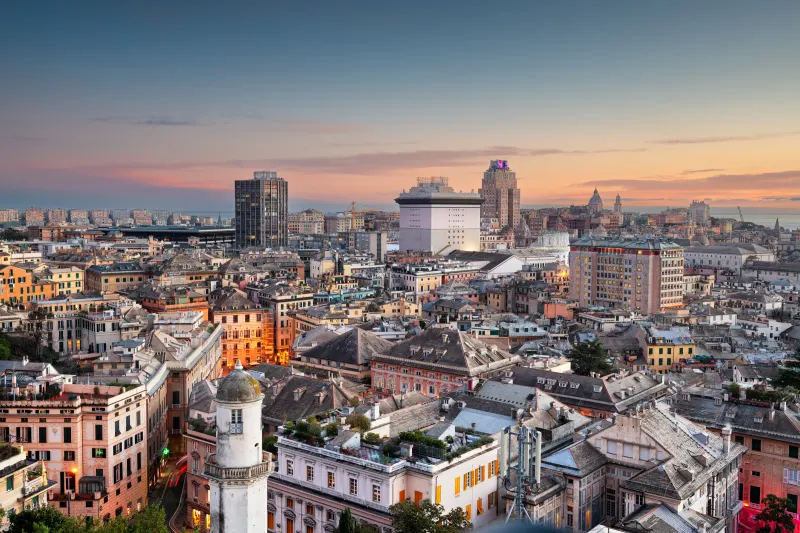
Genoa is the most underestimated city in Italy. Dense, layered, occasionally difficult — it's the kind of place that opens up slowly, almost suspicious of the hurried tourist. But give it one full day and you'll understand why the Genoese are convinced they live in the most extraordinary city in the world. It's hard to argue.
Here is how to spend one day in Genoa without wasting a single hour.
Morning — The Medieval Old Town: The Caruggi
Start at Piazza De Ferrari, the heart of the city. The central fountain, the Liberty-style palaces around it, the rhythm of Genoese life flowing through in every direction. This is not a postcard square — it's a living one. Take a moment to absorb it. Then turn north and let the Caruggi swallow you whole.
The Caruggi — Genoa's network of medieval alleyways — form the largest medieval historic centre in Europe. The lanes are narrow enough to touch both walls at once, so deep that sunlight arrives as a thin strip between ancient facades. This is not a reconstructed old town: it has remained intact for centuries, with its smells of fresh pesto, voices from upper-floor balconies, and laundry strung between windows four floors up.
Via San Luca is one of the main arteries, elegant and commercial since the Middle Ages. Via degli Orefici — the Street of the Goldsmiths — still carries traces of its artisan past. Vico del Filo is the kind of alley where midday sun barely grazes the pavement. Don't try to navigate with a map. Get lost on purpose. It's the correct way to experience the Caruggi.
Before leaving the old town, find the Cathedral of San Lorenzo: its black-and-white striped marble facade is a signature of Ligurian Romanesque-Gothic architecture. Inside, the Treasury Museum holds the Sacro Catino — traditionally said to be the dish of the Last Supper — and some of the finest examples of medieval goldsmithing in Europe. Almost nobody goes. That's exactly why you should.
Nearby, the Palazzo Ducale was the seat of the Republic of Genoa for centuries — one of the most powerful maritime republics in Mediterranean history. Today it hosts major temporary exhibitions, and the inner courtyard alone is worth a look.
Lunch — What to Eat in Genoa
Eating in Genoa is one of the great pleasures of Italian travel, and it is almost never properly celebrated. Ligurian cuisine was born from scarcity — a narrow region squeezed between mountains and sea — and turned modest ingredients into something exceptional.
The first non-negotiable ritual is focaccia genovese — fügassa in dialect. Don't buy it from the nearest tourist-facing bar. Find a neighbourhood bakery, where it comes out of the oven in the early morning and the smell of extra-virgin olive oil drifts into the street. Thick, soft, glossy on top. This is not a snack. It is an institution.
Farinata di ceci is the other local obsession: a flat chickpea pancake, baked in a copper pan in a wood-fired oven, crispy at the edges and creamy in the centre. Eaten hot, just out of the oven, with a crack of black pepper. In the Caruggi you'll find traditional fried food shops — sciamadde — that have been making it the same way for a hundred years.
If you want to sit down for a proper meal, look for pansotti al sugo di noci: pasta filled with wild herbs and ricotta, dressed with a walnut and marjoram sauce that has a fragrance unlike anything else in Italian cooking. Avoid the restaurants immediately surrounding the Porto Antico during peak tourist hours — move a few hundred metres toward the Caruggi or the Sarzano neighbourhood and the quality rises sharply.
Afternoon — The Porto Antico and Culture
After lunch, head toward the sea. The Porto Antico is one of the most successful urban regeneration projects in Europe: commissioned to Renzo Piano for the Colombiadi celebrations of 1992, it transformed a derelict port area into a living waterfront with public spaces, contemporary architecture, and restored historic warehouses.
The centrepiece is the Bigo, a steel structure inspired by the cranes of the old working port, with a rotating panoramic cabin that rises 40 metres above the waterfront. The view over Genoa and the Ligurian Gulf from up there is one of the best ways to understand the geometry of this extraordinary city.
Beside it, the Biosfera — a glass-and-steel sphere housing a tropical ecosystem — is another Renzo Piano creation: plants, butterflies, and equatorial microclimate, a few steps from the Ligurian sea. Small, unexpected, and genuinely delightful.
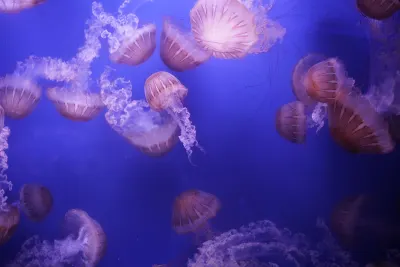
The Porto Antico's headline attraction is the Genoa Aquarium, the largest in Europe by biodiversity: sharks, dolphins, manatees, penguins, and reconstructed coral reefs built to a scientific standard that few aquariums in the world match. Essential with children, surprisingly absorbing without them. Find all the practical details in our dedicated article on the Genoa Aquarium.
For sunset, if the weather allows, take a short taxi or bus ride to Boccadasse: an ancient fishing village wedged between the rocks east of the city centre, with coloured houses reflected in the sea and a small pebble beach. When the sun drops over the Ligurian Gulf from there, you understand why Genoa stays with people long after they leave. More details in our article on Boccadasse.
How to Get to Genoa
- By train: from Milan Central station, approximately 1 hour 25 minutes. From Turin Porta Nuova, about 1 hour 45 minutes. From Rome Termini, around 4 hours 30 minutes on a Frecciabianca service. The main station is Genova Piazza Principe, a short walk from the Porto Antico.
- By car: Genoa is served by the A7 motorway from Milan, the A26 from Turin, and the A10 from the western Riviera. The historic centre is a limited traffic zone — leave the car in a multi-storey car park and walk.
- By plane: Cristoforo Colombo Airport is just 10 kilometres from the city centre, with direct flights from many European cities. Taxi to the Aquarium takes about 15–20 minutes.
Where to Stay in Genoa to Be at the Heart of the City
If this itinerary has convinced you to stay more than a day — and it very well might — where you sleep makes all the difference. Staying in or near the historic centre means waking to the sound of the city coming alive, stepping out for fresh focaccia at 8am, and returning in the evening through lit medieval alleyways. It's a dimension that a hotel on the commercial outskirts simply cannot offer.
An apartment — especially for couples or families — lets you experience Genoa as a temporary resident: shopping at the Mercato Orientale, cooking with pesto made from locally grown basil, having space and privacy no hotel room provides. The difference between visiting a city and truly feeling it often comes down to where you sleep.
Stay on the Ligurian Riviera with CasaViva
Planning your trip? CasaViva offers hand-picked apartments in Camogli, Rapallo, Santa Margherita Ligure and Genoa. Book directly — best rates guaranteed, no commission fees.
Browse available apartments →